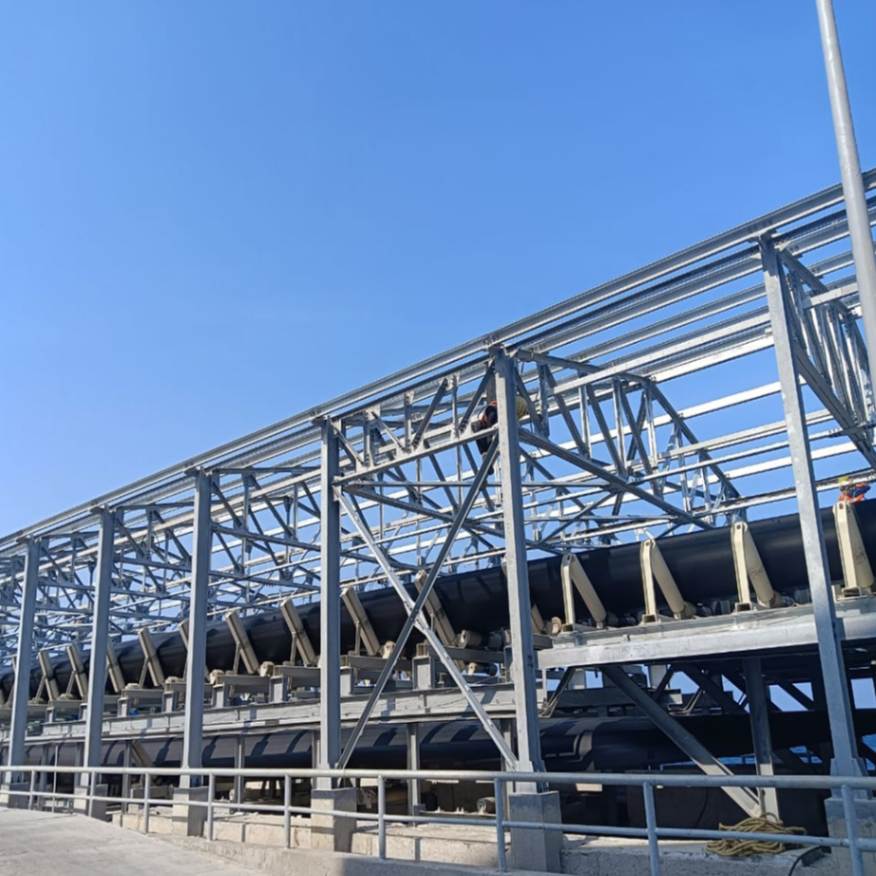
Mining & Quarrying:
Transporting coal, iron ore, sand, and gravel from pits to processing plants.
Agriculture:
Moving grains, seeds, and fertilizers between silos, dryers, and bagging stations.
Construction:
Conveying cement, crushed stone, and asphalt for large-scale infrastructure projects.
Chemical & Pharmaceutical:
Handling bulk powders and granules under strict hygiene and safety standards.
Power Plants:
Feeding coal or biomass into boilers for continuous energy production.
Feeding/Loading:
Raw materials are introduced into the system via hoppers, chutes, or feeders that regulate the flow to prevent overloading.
Material Conveyance:
The material is carried along a reinforced belt, screw, or chain, supported by high-quality idlers or rollers that ensure smooth movement.
Intermediate Processing (Optional):
During transit, materials can be screened, weighed, or magnetically separated to remove impurities.
Directional Control:
Using diverters or trippers, the material can be routed to different discharge points based on current production requirements.
Discharge:
The material is safely unloaded into a storage bin, a secondary conveyor, or directly into a shipping vessel/truck.